🤝 Workplace Know-How
The "Unwritten Rules" of Japanese Workplaces — What No One Tells You
Rules that aren't in any manual — yet everyone follows them
📖 7 min read📅 2026-07-13
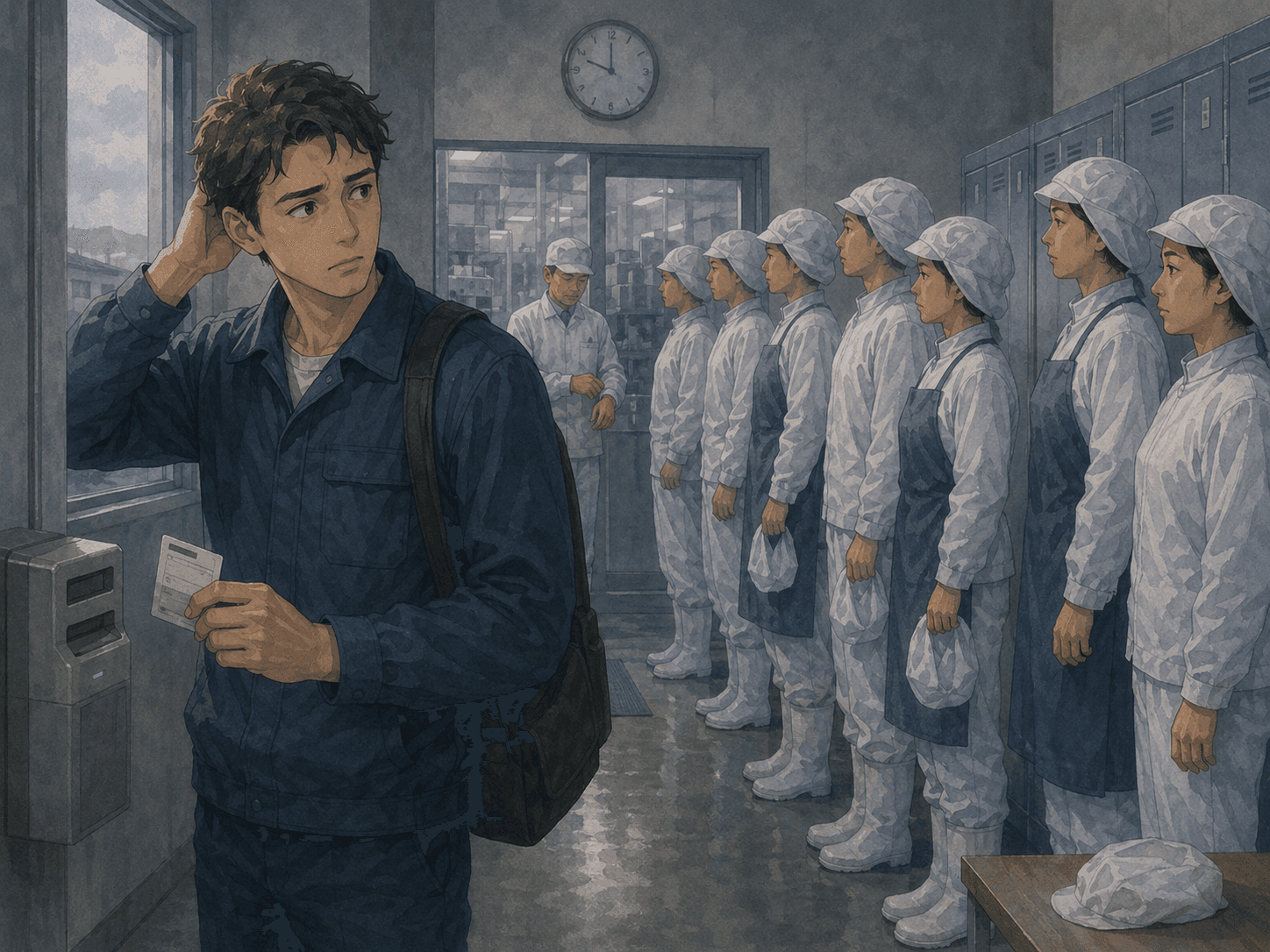
"I honestly had no idea why I was being scolded."
Bikas (26) from Pokhara, Nepal still remembers that morning in his second week at a food factory in Saitama.
Work started at 9:00. Bikas punched his timecard at 8:58. He wasn't late. And yet a senior coworker told him, "Come in earlier."
It made no sense. If work starts at 9, arriving before 9 should be enough. That's how it was back home. But in his Japanese workplace, "9:00 start" meant "be ready to start working at 9:00." Changed into your uniform, standing at your machine, morning briefing about to begin — that is 9:00. So everyone was there by 8:45.
No one taught him that at the start. It isn't written in any manual. But everyone follows it, and if you don't, people think "he's not motivated" — that is an "unwritten rule."
Bikas went on to stack up more small failures. He left silently when his work was done — the next day, the air felt colder. He kept turning down drinking parties — and at some point, he was no longer part of the small talk. None of it was anything "bad," and yet.
Three months later, the senior coworker he got along with best told him: "Bikas, you work so hard — but you're selling yourself short."
So that you don't sell yourself short, read on. Below is a list of "unwritten rules" common to many Japanese workplaces.
These are not laws or company work rules. There is no penalty for breaking them. But just knowing them can transform your workplace relationships. You don't need to do all of them perfectly. What matters is knowing "this is how it's seen in a Japanese workplace."
01.Arrive at work 10–15 minutes before starting time
In Japan, "9:00 start" is often used to mean "ready to begin working at 9:00." Counting changing, preparation, and the morning briefing, arriving 10–15 minutes early is the safe zone. Note: legally, there is a view that preparation time should count as working hours, and forcing extreme early arrival is a problem — but "arriving a few minutes early" is firmly established as good manners in Japan.
02.Greet people first, in a slightly bigger voice
Say "ohayo gozaimasu" (good morning) when you arrive, "osaki ni shitsurei shimasu" (excuse me for leaving first) when you leave, and give a small nod when you pass someone. In Japanese workplaces, greetings are an evaluation item where the bar is "of course you do it." People who greet first are seen as "pleasant" for that alone. Even if you're not confident in your Japanese, always say your greetings out loud.
03."Sumimasen" is not only a word of apology
Japanese people use "sumimasen" with three meanings: apology, thanks, and getting attention. When someone does something for you: "sumimasen, arigato gozaimasu." When you approach someone: "sumimasen, do you have a moment?" Saying it when you've done nothing wrong may feel strange — but think of it as a lubricant that softens conversation.
04.Don't leave without saying anything
Even when your own work is done, leaving silently can be seen as "lacking team spirit." The rule is to say a quick "osaki ni shitsurei shimasu" on your way out. Some workplaces also have a culture of asking, "Is there anything I can help with?" If you ask and hear "We're fine — otsukaresama," you can head home with peace of mind. How to decline when you're asked to do overtime you can't take — we cover that in another article.
05.Drinking parties are not mandatory — but your own welcome party is worth attending
Attending drinking parties is voluntary, and you don't have to drink alcohol ("tea is fine for me" works). That said, we do recommend attending your own welcome party — it's the first chance your coworkers get to know you. When declining an invitation, don't stop at "I can't go." Use thanks + reason + next time: "Thank you! I have plans that day... please invite me again." It keeps things smooth.
06.The worse the news, the sooner you share it
Mistakes, running late, feeling unwell — the harder something is to say, the faster you say it. That's the rule in Japan. Wait until you've "organized your thoughts" or "calmed down," and the problem doubles into "why didn't you tell me right away?" If your train is delayed, call or message at that very moment. We explain more in our article on "horenso."
07.You're allowed to join the small talk and lunch circles
Japanese coworkers sometimes hold back from inviting you. It's often not that they dislike you — it's consideration: "talking in Japanese might be a burden for them." It's completely fine to step in yourself with "Mind if I join you?" Weather, food, and hometowns are safe small-talk topics in any workplace.
08.Your keigo doesn't have to be perfect. Just keep "desu/masu"
Almost no one gets angry at a foreigner for mixing up honorific and humble forms. What matters is one thing: speak to bosses and senior coworkers in the polite "desu/masu" form. As long as you don't slip into casual friend-speak (tameguchi), keigo mistakes are received warmly — as "they're trying their best to communicate."
After his senior coworker filled him in, Bikas moved his arrival time 15 minutes earlier and started saying a quick word on his way out. That's all he changed. Six months later, he was the one teaching the "unwritten rules" to a new Nepali junior. "If I'd known from the start, I wouldn't have struggled so much" — those are Bikas's words.